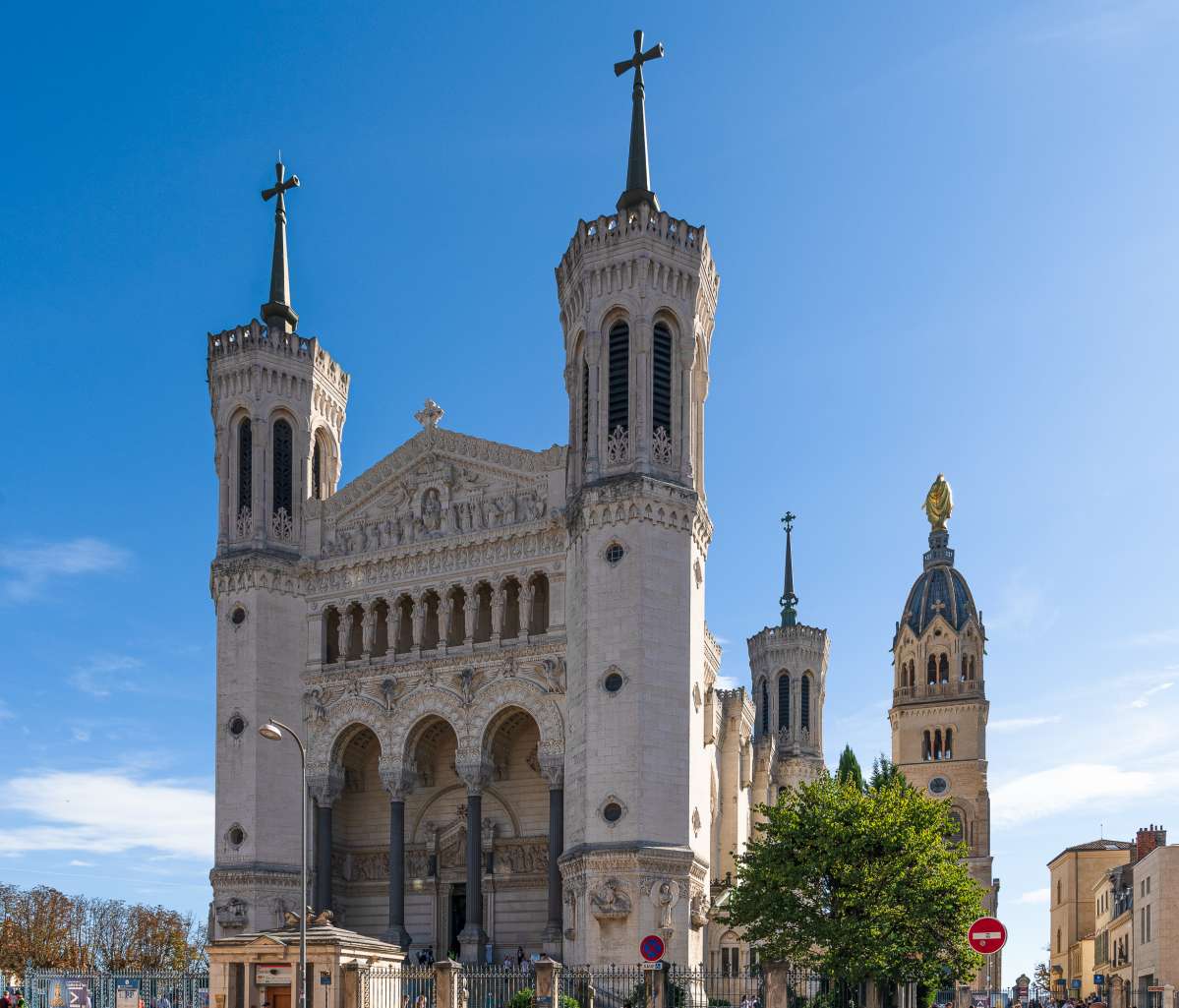
A landmark for the people of Lyon, Fourvière basilica and its esplanade feature high on the tourism bucket list. Perched above the city at an altitude of 287 metres, the basilica may seem inaccessible from below. But don't worry, it's just an optical illusion and the walk up is really worth it! Besides the superb panoramic views of the city, you will also discover a maze of charming streets and impressive buildings steeped in history. And take our word for it: the climb is a perfect way of digesting the gargantuan feast you've just enjoyed at a Lyonnais bouchon!
100% on foot via the Montée du Gourguillon
124 m elevation gain, 1.4 km or just under a mile, c. 2,300 steps, 30 minutes. To view the route on the map below, click on the blue icon.
History, etymology and hidden stories
We suggest you scale Fourvière hill via one of the oldest streets in Lyon, the Montée du Gourguillon. Naturally carved by water over thousands of years, the road was heavily used in Roman times around 43 BC, linking the town of Lugdunum at the top of the hill to the banks of the River Saône. Even today, the street is the main thoroughfare between the Saint-Just district and Vieux Lyon.
The street's distinctive name of “Gourguillon” is said to be derived from the sound of rainwater gushing down the slope. In fact, the street acts as a kind of gutter channelling rainwater down the hill. Several authors trace the etymology back to the Latin "gurges sanguinis", referring to the gurgling of the blood of Christian martyrs which is said to have flowed from the hill down to the Saône during the persecutions of 177 AD.
The legend of the lost diamond: in 1305, the Montée du Gourguillon was the scene of a terrible accident. On 14 November of that year, Pope Clement V was crowned in the church of Saint-Just. But as the papal procession was descending the street, a landslide occurred. The toll was heavy: 12 casualties including the Duke of Brittany. Fortunately the Pope was spared, but a diamond dropped off his tiara as he fell. Despite the searches carried out the day after the tragedy, the precious stone could not be found. Perhaps you will stumble across it during your walk!
What to see on the way:
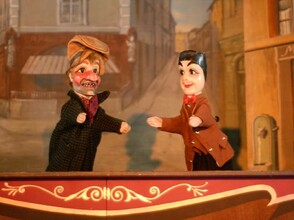
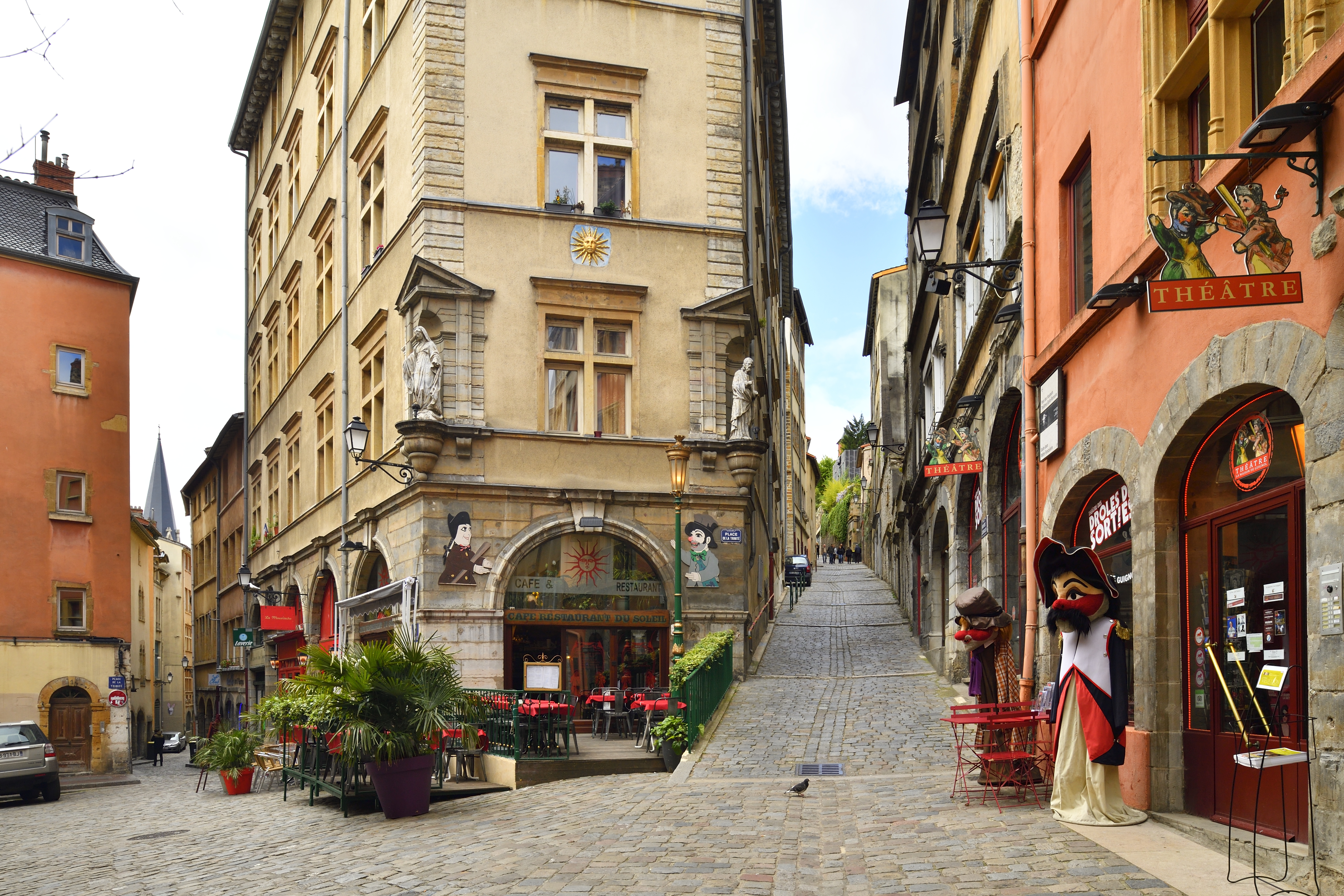
- Théâtre de la Maison Guignol: after walking along Rue Mourguet, the street named after the creator of Lyon's famous "Guignol" puppets, you will emerge onto the pretty Place de la Trinité opposite the Café du Soleil. On your right you will see La Maison de Guignol, a theatre dedicated to puppetry since 1965! Don't miss the opportunity to see a puppet show: they're included in the Lyon City Card.
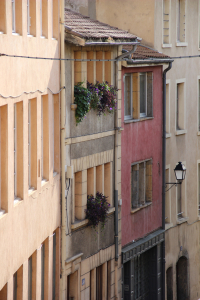
- The oldest houses in Lyon: at the start of the climb, don't miss the tiny Impasse Turquet on your left. This discreet alleyway houses two of Lyon's oldest houses thought to have been built towards the end of the 15th century. They are the only houses to have preserved their suspended wooden galleries, vestiges of an era when houses were undoubtedly half-timbered and half-stone before the arrival of the Italians. The dead-end bears the name of Etienne Turquet, a famous Piedmontese merchant who set up a number of silk-weaving workshops and largely contributed to making Lyon the silk capital of Europe.
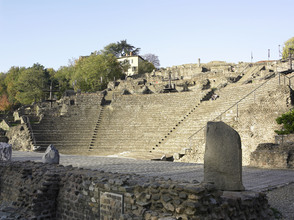
- The Roman theatres: once you have passed the Minimes Théâtres Romains funicular station, you have two options: either continue the walk along Rue de l’Antiquaille, or visit the archaeological site and check out the impressive Gallo-Roman remains. If you choose the second option, be aware that the steps leading to the top of the Grand Théâtre are very large and may be challenging for persons with weak knees or little legs!
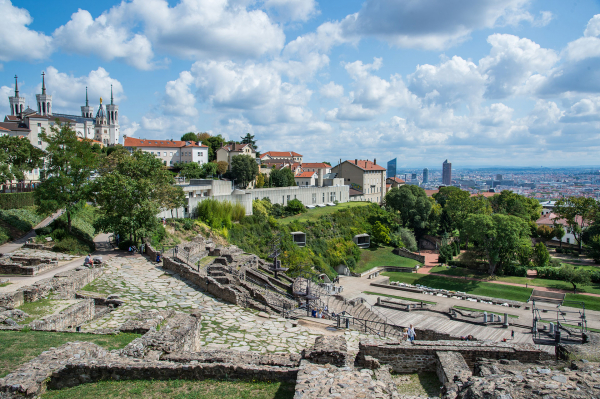
Tip: tread carefully in rainy conditions, as wet cobblestones can be treacherously slippery! Avoid smooth-soled shoes.
Option: 50% by funicular, 50% on foot
35 m positive elevation gain (40 metres via the steps of the ancient theatre)
Rest assured, we have also thought of an alternative route for the less athletically minded or for families!
Rather than taking the funicular to Fourvière, often besieged by tourists at the weekend, switch to its less crowded younger sister going to Saint-Just.
Besides introducing children to this unusual mode of transport, this alternative allows you to split the route in two by getting off at the Minimes Théâtres Romains stop. Once there, follow the initial route: you will only have one kilometre and 40 metres of positive elevation gain left to reach the basilica.