- Discover
- Heritage / UNESCO
- Remarkable sites and monuments
- Passage de l'argue
Passage de l'argue
Remarkable sites and monuments
Last updated date : 31/08/2026
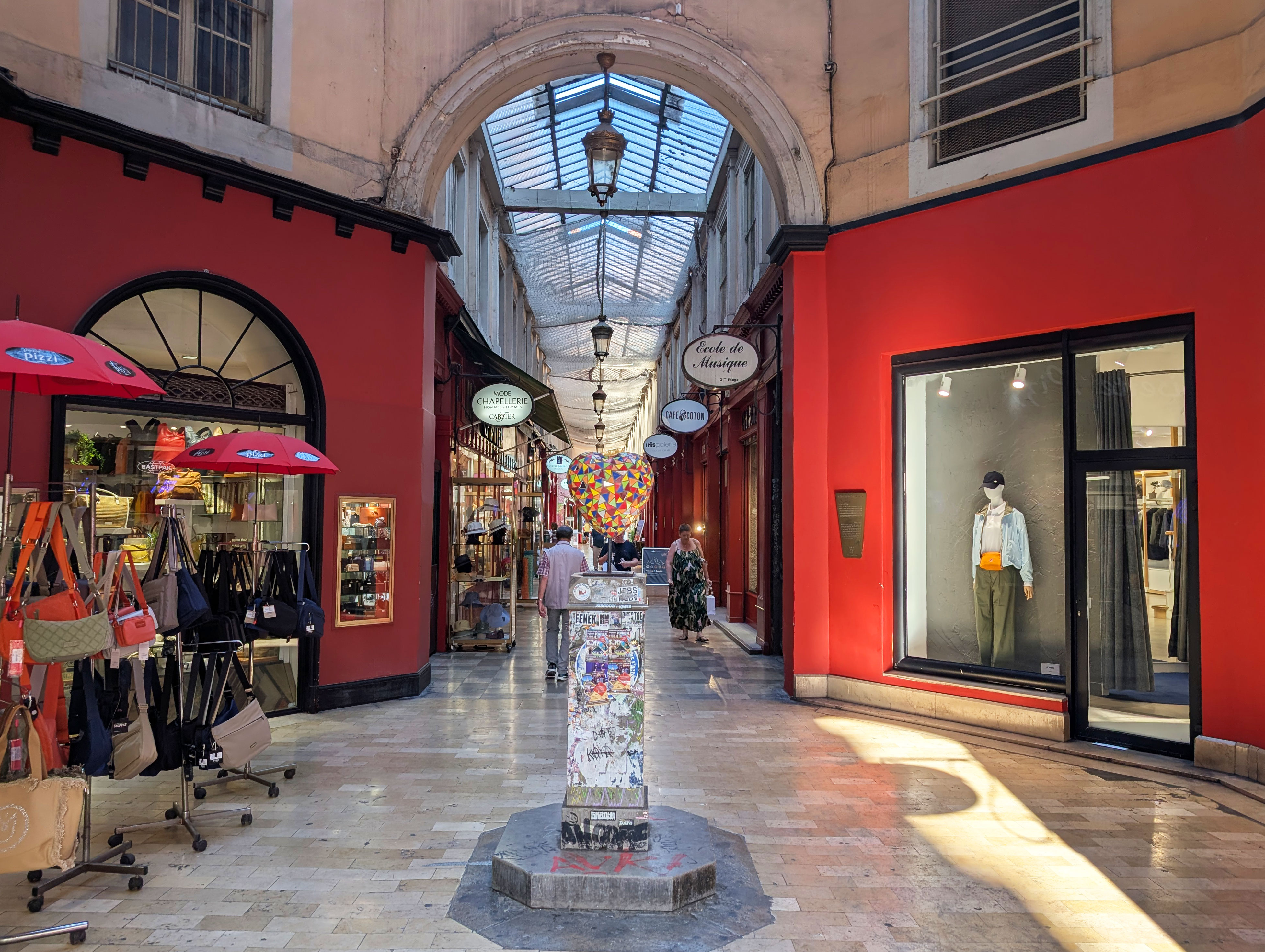
Opened in 1826, the Passage de l'Argue is a covered passageway in the neoclassical style, inspired by the galleries of Milan. It connects Rue de Brest to Rue de la République and is home to numerous shops, some of which are over a century old!
See all pictures
Introduction to the Passage de l'Argue
Built in 1826, the Passage de l'Argue is a covered passageway in the neoclassical style, inspired by the galleries of Milan. It links Rue de Brest with Rue de la République and is home to numerous shops, some of which are over a century old!
Looking for pratical informations?
History of the passage
The Passage de l’Argue now stands on the site of ‘Les ateliers de l’Argue’, where a machine called an ‘argue’ was used to draw gold wire from ingots for various purposes, such as silk production, jewellery making and goldsmithing.
In 1826, architect Farge covered over the arcade, transforming it into the Passage de l’Argue. In 1834, Lyon experienced social unrest, with workers taking refuge in the passage and repelling the soldiers. The soldiers were forced to fire two cannons at the passage to restore order.
Following its inauguration by Édouard Herriot, the Passage de l’Argue became a leisure destination. People would enjoy themselves at the Café Seguin, which was renowned for its dancing and pantomimes. They would dine at the Restaurant Caillot alongside 'the gentlemen of the Fabrique', and the Théâtre des Bouffes Lyonnais and its café-concert later appeared. Visitors could also see Mourguet and Lamadan, who were famous for their puppets depicting Lyon’s folklore.
There was also a public scribe, a valuable service for the many people who could not write at that time. Other notable figures included a luthier named Fontana, a cobbler and a metal engraver named Chancrin. There was also a Lyon choir called 'L'Harmonie Gauloise', from which some of the era's celebrities would emerge. The Maison Chavant, with its thousand brushes for cleaning, maintenance and beauty, was the forerunner of the Brossard cutlery firm, which still exists today and has been passed down through the generations.
Renowned craftspeople
Throughout its history, the Passage has been home to prestigious artisans and retailers selling cutlery, watches, pipes and hats, among other things, making it one of Lyon’s main shopping streets. Two hundred years after its opening, the Passage is home to around twenty specialist shops, most of which focus on traditional crafts and high-end goods, including hatmakers and cutlers.
You’ll find everything in this gallery, from artistic jewellery and hats to socks, classic or unusual paintings and photographs of New York, Lyon or the desert, sweets, berlingots, kitchen knives, shaving brushes, watches, umbrellas, bags and luggage.
Our selection of shops to explore
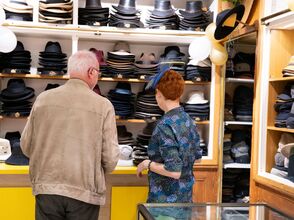
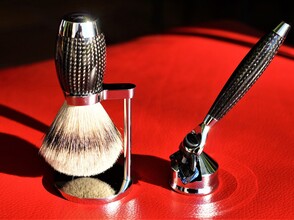
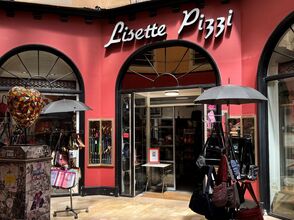

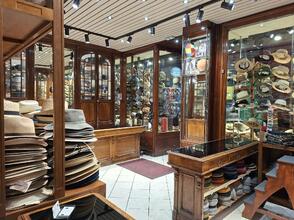
In summer, people love to visit to escape the heat; in autumn, it’s the perfect sheltered place to go shopping. In December, visitors can admire the magical decorations with their mirror balls and fairy lights.
Since 2018, a multicoloured mosaic heart has adorned the glass roof of the rotunda, close to the Rue Edouard-Herriot entrance. Designed by the Lyon-based street art duo Skéné, the heart was installed for Valentine’s Day to fill the empty space left by the stolen statue of Mercury, the Roman god of trade and travellers.
Don’t miss out on a visit to this unmissable hotspot in the town centre!
Remarkable sites and monuments
Passage de l'argue
Passage de l'Argue
I go by alternative transportation
Public transit
On metro line A, at Cordeliers or Bellecour station.
Take the S1 bus to the Jacobins stop.
with